 VapeWholesaleHub
Warehouse Layout Tips for 18650 Battery Distributors — Container-Scale Orders
This page is written for the person who has to sign the purchase order, not for the person who designed the packaging. If you are weighing up 18650 battery right now, the sections below follow the order in which the real decisions tend to arrive.
The Specification That Matters
When we write a 18650 battery specification with a distributor, we fix four things first: the resistance band, the liquid capacity tolerance, the puff count methodology and the packaging master carton. Everything else can flex without changing the customer experience.
Ask any factory for the same 18650 battery sample twice, three months apart. If the second sample drifts, the production line is running without statistical control and your reviews will drift with it. Consistency over time is a more useful signal than a single good sample.
| Product category | Pod system |
|---|---|
| Resistance band | 0.8 - 1.0 ohm |
| Capacity tolerance | +/- 3% |
| Puff count method | Declared by capacity |
| Master carton | 100 units |
| Carton weight | 6.0 kg |
| Shelf life | 12 months |
| Storage | 15-25 C, dry, away from direct light |
Modelling a Healthy Margin
When 18650 battery input costs move, ask which component moved. A generic price increase hides whether you are paying for cells, packaging or simply a busy production calendar.
Indicative reference points for planning purposes: entry tier from USD 2.34 per unit at 500 units, mid tier at USD 0.71, and volume tier at USD 1.03 for full container quantities. These figures move with specification, packaging and freight, so treat them as a shape rather than a quote.
Logistics That Protect Margin
Customs classification for 18650 battery varies by market and changes from time to time. We ship with full documentation, but your broker should confirm the current code before your first order rather than after it lands.
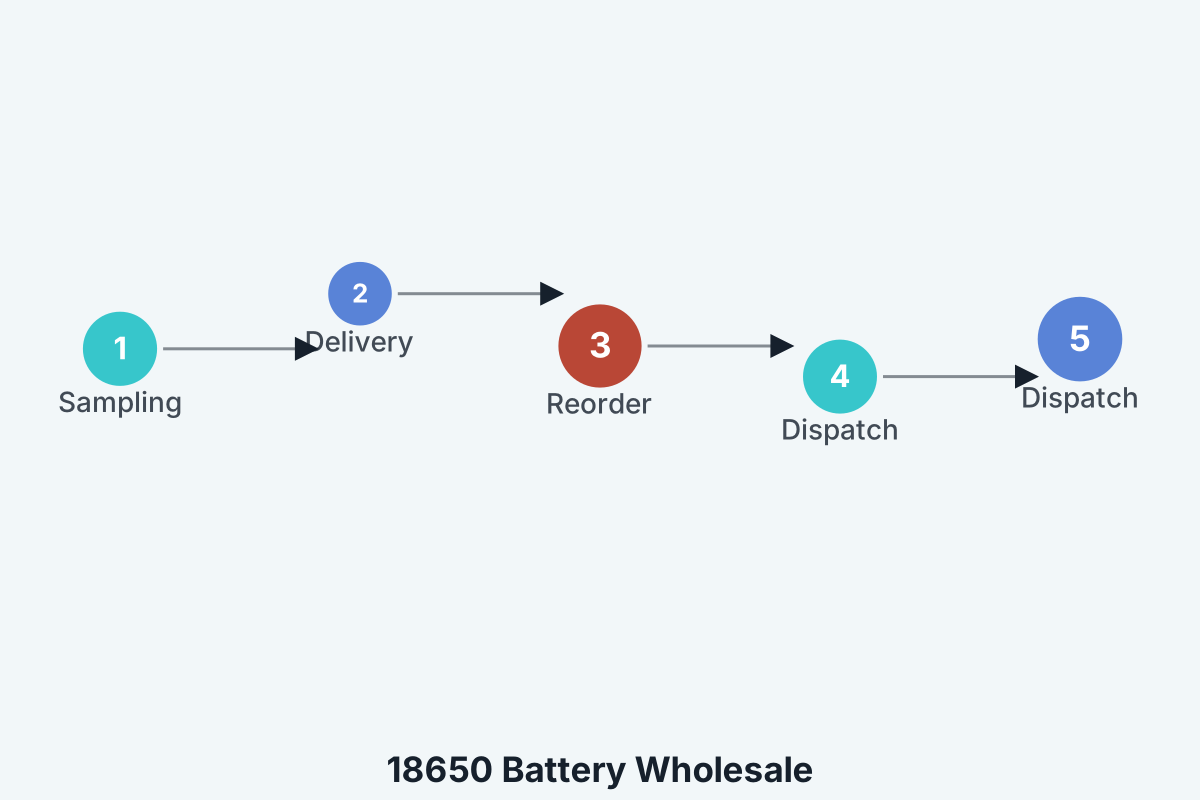
How 18650 Battery Batches Are Checked
The defect rate that matters is the one your customer experiences, not the one the factory reports. Bridge that gap by inspecting the way a customer would open the box, not the way a line worker packs it.
Set the 18650 battery complaint threshold in the contract before you need it. Deciding what counts as an acceptable defect rate during a dispute is the worst possible time to negotiate it.
- Model landed cost, not ex-works price, when comparing quotes.
- Check carton dimensions against your freight quote before confirming.
- Rotate stock by batch code rather than by delivery date.
- Keep sealed retained samples from every production batch.
- Agree the tolerance band in writing before approving artwork.
Positioning 18650 Battery on Your Shelf
Think about where 18650 battery sits in your customer's week. If it is a weekly restock, breadth matters less than availability. If it is an occasional treat, flavour range and display story carry more weight.
Selling 18650 Battery at Store Level
Staff knowledge moves 18650 battery more than any fixture. A two minute explanation of the difference between this line and the one next to it converts a browsing shopper into a repeat buyer far more reliably than a discount.
Staff knowledge moves 18650 battery more than any fixture. A two minute explanation of the difference between this line and the one next to it converts a browsing shopper into a repeat buyer far more reliably than a discount.
Practical Checklist
- Agree the tolerance band in writing before approving artwork.
- Start with a mixed carton and let your own sell-through decide.
- Ask how the factory measures puff count, then compare like with like.
- Check carton dimensions against your freight quote before confirming.
- Plan the switch from air to sea freight before you need it.
- Model landed cost, not ex-works price, when comparing quotes.
Frequently Asked Questions
Do you hold stock for regular customers?
For established programmes we can reserve production slots and, in some cases, hold finished 18650 battery stock against a forecast. It removes most of the lead time risk from a reorder and is worth discussing once volumes are stable.
How do you handle a short shipment?
Cartons are counted and weighed before dispatch and the figures are shared with you. If something is short on arrival, the packing record and the carrier documentation are both available, which keeps the claim straightforward.
Is there support for in-store material?
Yes. Shelf talkers, counter cards and simple planogram suggestions are available for 18650 battery ranges that reach a sensible volume. Most retailers find the plain strength and flavour cards do the most work.
How should 18650 battery be stored?
Cool, dry and out of direct sunlight. Heat and light are the two things that shorten shelf life fastest. Rotate stock by batch code rather than by arrival date, and keep cartons off concrete floors in humid warehouses.
Can you match an existing product I already sell?
Often yes, provided we can measure it properly. Send a physical sample and we will report back on what can be matched, what will differ slightly, and why. An honest gap is more useful than a vague promise.
Next Step
Whatever you decide, decide it against numbers you can check on arrival. That single discipline removes most of the risk from importing 18650 battery.
Related Reading
- 18650 Battery Payment Terms and Risk Management — Cross-Border Trade
- 18650 Battery Specifications Every Buyer Should Check — Landed Cost Worked Through
- 18650 Battery Humidity Control in Coastal Warehouses — Retail Chains
- 18650 Battery Packaging Formats That Reduce Damage Claims — Latin America
- 18650 Battery Cross Selling With Adjacent Categories — Before Your Next Order
- How to Read a 18650 Battery Certificate of Analysis — Oceania