 VapeWholesaleHub
Merchandising 18650 Battery Inside a Physical Store — North America
There is no clever trick to buying 18650 battery well. There is a short list of things worth checking and a long list of things that distract from them. This page is an attempt at the short list.
Freight, Customs and Timing
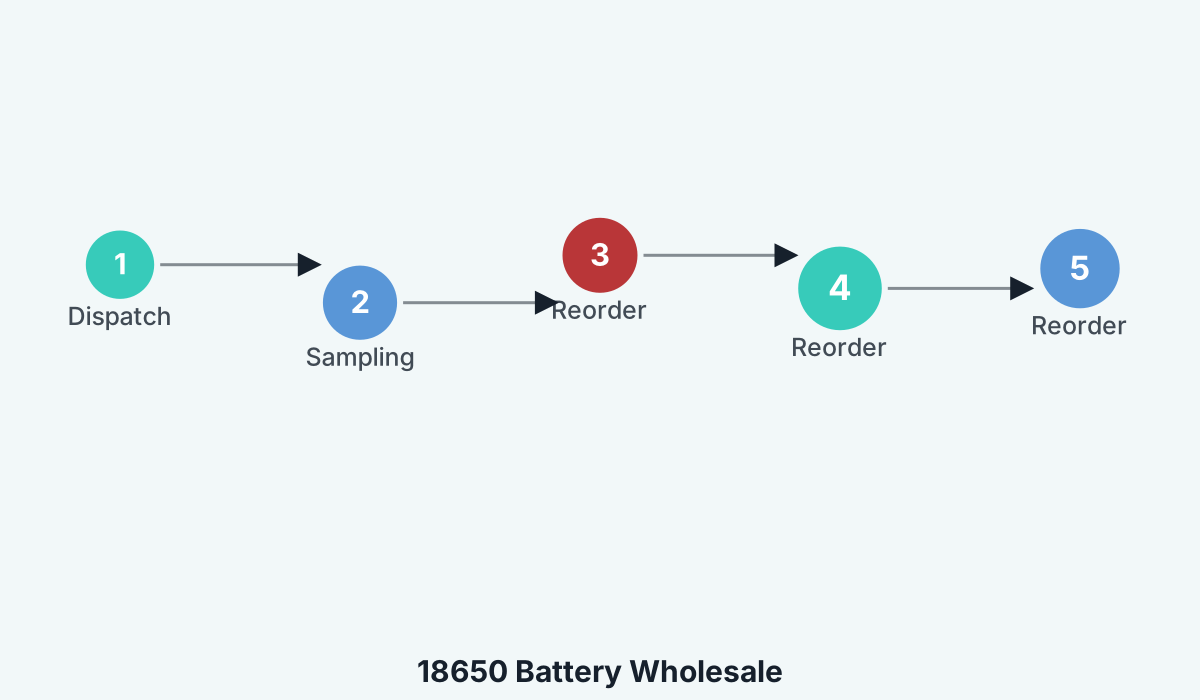
Air freight makes sense for a first 18650 battery order when you need to test demand quickly, but almost every steady programme moves to sea freight once volumes stabilise. Planning that switch early avoids a painful margin squeeze later.
Air freight makes sense for a first 18650 battery order when you need to test demand quickly, but almost every steady programme moves to sea freight once volumes stabilise. Planning that switch early avoids a painful margin squeeze later.
Market Signals
Traceability is moving from a nice-to-have to a requirement in several 18650 battery markets. Building the habit now is cheaper than retrofitting record keeping under pressure later.
One shift worth planning for: shorter 18650 battery reorder cycles with smaller average drops. It favours suppliers with flexible production slots over those who only want large annual commitments.
Selling 18650 Battery at Store Level
Use your 18650 battery staff training time on the two questions customers actually ask. Anything more detailed gets forgotten by the second shift.
On shelf, 18650 battery sells on clarity. A plain shelf talker that states strength and flavour in two words outperforms a beautifully designed but vague display, because most purchase decisions here take under ten seconds.
Modelling a Healthy Margin
Hold a small 18650 battery buffer in your pricing model for currency movement. A few percent on a container is a real number, and it is easier to plan for than to absorb.
Indicative reference points for planning purposes: entry tier from USD 1.51 per unit at 2000 units, mid tier at USD 1.79, and volume tier at USD 0.96 for full container quantities. These figures move with specification, packaging and freight, so treat them as a shape rather than a quote.
The Specification That Matters
Ask for the 18650 battery specification in the same units you intend to measure in. A metric quoted in a form you cannot verify on arrival is not a specification, it is a claim.
Where possible, tie part of the 18650 battery payment to inspection against the written spec. It focuses attention on the numbers rather than on the relationship.
| Product category | Pod system |
|---|---|
| Resistance band | 0.8 - 1.0 ohm |
| Capacity tolerance | +/- 5% |
| Puff count method | Declared by capacity |
| Master carton | 200 units |
| Carton weight | 8.8 kg |
| Shelf life | 12 months |
| Storage | 15-25 C, dry, away from direct light |
Practical Checklist
- Write the complaint threshold into the order terms.
- Start with a mixed carton and let your own sell-through decide.
- Plan the switch from air to sea freight before you need it.
- Model landed cost, not ex-works price, when comparing quotes.
- Rotate stock by batch code rather than by delivery date.
- Agree the tolerance band in writing before approving artwork.
Frequently Asked Questions
Can the packaging be customised?
Yes. Most 18650 battery programmes use private label packaging once volumes justify the printing plate. We supply dielines, check your artwork for print issues and hold approved files so reorders need no new setup.
How are price changes handled on repeat orders?
{K} pricing is reviewed against input costs and volume rather than adjusted casually. Any change is confirmed in writing before the next order is scheduled, with the reason stated so you can judge it yourself.
Do you provide compliance documents?
Every shipment leaves with the documentation set relevant to your market, including batch records and test reports where required. Your local rules still determine what you must file, so confirm those with your broker before import.
Do you hold stock for regular customers?
For established programmes we can reserve production slots and, in some cases, hold finished 18650 battery stock against a forecast. It removes most of the lead time risk from a reorder and is worth discussing once volumes are stable.
What if a batch does not match the sample?
Keep the retained samples from the approval stage. If a delivered batch measurably differs, we compare against the retained set and resolve it against the production record. This is why we insist on sealed retained units from every run.
Next Step
Whether you order from us or elsewhere, keep a retained sample from every batch. It costs almost nothing and it is the single most effective protection available to a 18650 battery buyer.
Related Reading
- 18650 Battery Inventory Turnover Benchmarks for Stores — Cross-Border Trade
- 18650 Battery Distributor Onboarding Steps — 2026 Edition
- 18650 Battery Tamper Evidence and Seal Integrity — Online Sellers
- 18650 Battery Insurance and Cargo Cover Explained — Latin America
- 18650 Battery Freight Options Compared: Air, Sea and Express — a Factory Floor View
- 18650 Battery When to Add a Second Factory — Online Sellers