 VapeWholesaleHub
How to Brief a Factory on 18650 Battery — Container-Scale Orders
Treat 18650 battery as a repeat purchase category rather than a one off buy. That single change in framing alters almost every decision downstream, from carton size to how many strengths you list.
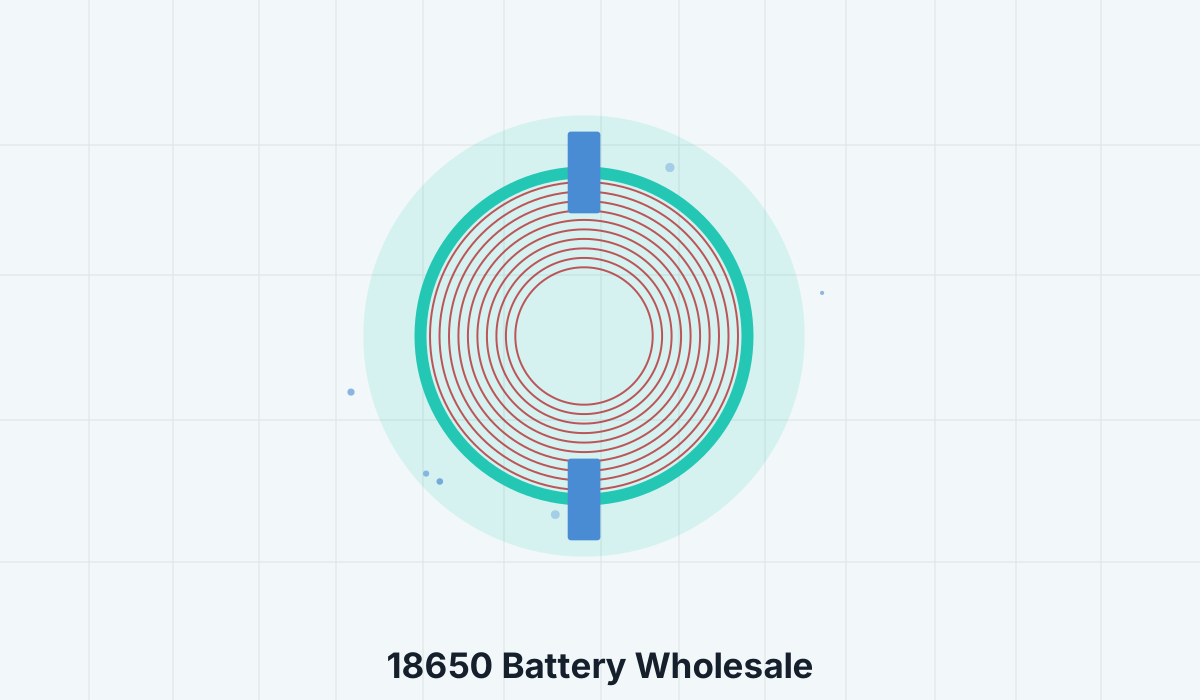
Turning 18650 Battery Into Repeats
Staff knowledge moves 18650 battery more than any fixture. A two minute explanation of the difference between this line and the one next to it converts a browsing shopper into a repeat buyer far more reliably than a discount.
Where 18650 Battery Sits in the Range
Range decisions for 18650 battery should start from shelf space, not from a supplier catalogue. Count the facings you actually have, then decide how many of them this line deserves against what it currently earns.
Quality Control in Practice
Inspection is only useful if the result is recorded somewhere you can find it later. A 18650 battery batch log with weights, codes and measurements turns a future complaint into a five minute lookup.
Most defects in 18650 battery are not dramatic. They are loose tolerances, a slightly thin seal, a mouthpiece that clicks. Left alone they turn into leak complaints, which are the single most common reason a retailer drops a line.
- Write the complaint threshold into the order terms.
- Agree the tolerance band in writing before approving artwork.
- Keep sealed retained samples from every production batch.
- Ask how the factory measures puff count, then compare like with like.
- Start with a mixed carton and let your own sell-through decide.
Modelling a Healthy Margin
Discounting 18650 battery to win shelf space tends to reset customer expectations permanently. Volume support in kind, such as display material, usually costs less in the long run.
Hold a small 18650 battery buffer in your pricing model for currency movement. A few percent on a container is a real number, and it is easier to plan for than to absorb.
Indicative reference points for planning purposes: entry tier from USD 1.68 per unit at 500 units, mid tier at USD 1.22, and volume tier at USD 0.67 for full container quantities. These figures move with specification, packaging and freight, so treat them as a shape rather than a quote.
Reading a 18650 Battery Spec Sheet
Pay attention to how a 18650 battery supplier responds when you ask for a tolerance they do not want to commit to. The hesitation is usually more informative than the eventual answer.
Revisit the 18650 battery specification after every third order. Small improvements compound, and factories take a buyer more seriously when the document has clearly been used.
| Product category | Refillable kit |
|---|---|
| Resistance band | 1.0 - 1.2 ohm |
| Capacity tolerance | +/- 3% |
| Puff count method | Machine cycle 3s on / 27s off |
| Master carton | 300 units |
| Carton weight | 3.2 kg |
| Shelf life | 18 months |
| Storage | 15-25 C, dry, away from direct light |
Logistics That Protect Margin
Consolidating 18650 battery with other lines is often the biggest single saving available to a mid size importer. The unit cost does not change but the landed cost does, sometimes materially.
Track 18650 battery landed cost per unit as a running number, including duty and local delivery. It is the only figure that tells you whether a supplier change actually improved anything.
Practical Checklist
- Plan the switch from air to sea freight before you need it.
- Check carton dimensions against your freight quote before confirming.
- Keep sealed retained samples from every production batch.
- Model landed cost, not ex-works price, when comparing quotes.
- Rotate stock by batch code rather than by delivery date.
- Ask how the factory measures puff count, then compare like with like.
Frequently Asked Questions
What happens if my market changes its rules?
Regulations move, and packaging or documentation sometimes has to follow. We keep approved artwork files on hand so that a required change is a reprint rather than a redesign, which keeps the cost and delay down.
Can I mix strengths in one order?
In most cases yes, as long as each strength meets the minimum run length. Mixed strength cartons are popular with retailers building their first display because they show the full ladder without over committing.
How are price changes handled on repeat orders?
{K} pricing is reviewed against input costs and volume rather than adjusted casually. Any change is confirmed in writing before the next order is scheduled, with the reason stated so you can judge it yourself.
What information do you need to quote?
Target specification, approximate quantity, destination and any packaging requirement. With those four we can usually come back with a costed option the same working day rather than a request for more information.
What if I only need a small first order?
That is normal and sensible. A mixed carton lets you test 18650 battery in your own market before committing to a production run, and the specification you approve at that stage carries through to larger orders unchanged.
Next Step
The best 18650 battery programmes we see are run by buyers who write things down. Specifications, batch records, complaint thresholds - the paperwork is the advantage.
Related Reading
- 18650 Battery Shelf Life, Batch Codes and Traceability — Specialist Vape Shops
- 18650 Battery Warehouse Picking and Batch Rotation — EU Markets
- Common 18650 Battery Mistakes New Distributors Make — Wholesale Clubs
- 18650 Battery Emissions and Leak Testing Methods — Warehouse Teams
- How to Brief a Factory on 18650 Battery — UK and Ireland
- 18650 Battery Competitor Range Teardown — Southeast Asia