 VapeWholesaleHub
How to Brief a Factory on 18650 Battery — 2026 Buyer Notes
A 18650 battery programme fails in predictable ways: a specification nobody wrote down, a sample nobody retained, and a lead time nobody stress tested. Here is how to close those three gaps before they cost you a container.
Inspection Before Dispatch
Incoming inspection for 18650 battery is not about opening boxes at random. We weigh a sample of cartons, check batch codes against the production record, run a draw resistance measurement, and log the results so that a complaint three months later can be traced to a specific run.
Random checks are fine, but weight the sample towards the start and end of a 18650 battery production run. Those are where a line is most likely to drift.
- Ask how the factory measures puff count, then compare like with like.
- Keep sealed retained samples from every production batch.
- Write the complaint threshold into the order terms.
- Agree the tolerance band in writing before approving artwork.
- Plan the switch from air to sea freight before you need it.
Merchandising and Listing Tips
Keep the 18650 battery range tidy. A half empty shelf reads as a dying line, and customers interpret it that way faster than any signage can correct.
Put 18650 battery where the decision is made, not where the margin is highest. In most stores that means near the counter or at eye level in the category, rather than wherever there is spare space.
Where 18650 Battery Sits in the Range
One useful exercise: list every 18650 battery line you stock and mark the last date each one sold at full price. Anything without a recent full price sale is taking space from something that would use it better.
18650 Battery sits at an interesting point in the assortment. It is familiar enough to be an impulse purchase and specific enough to build a repeat pattern around. Treating it as either pure commodity or pure specialty both lead to poor results.
What 18650 Battery Really Costs Landed
Build 18650 battery price tiers around order sizes your customers actually place. Tiers that only make sense on a spreadsheet get ignored, and you end up discounting ad hoc instead.
Indicative reference points for planning purposes: entry tier from USD 1.30 per unit at 1000 units, mid tier at USD 0.82, and volume tier at USD 0.62 for full container quantities. These figures move with specification, packaging and freight, so treat them as a shape rather than a quote.
Trends Worth Watching
Traceability is moving from a nice-to-have to a requirement in several 18650 battery markets. Building the habit now is cheaper than retrofitting record keeping under pressure later.
Logistics That Protect Margin
Track 18650 battery landed cost per unit as a running number, including duty and local delivery. It is the only figure that tells you whether a supplier change actually improved anything.
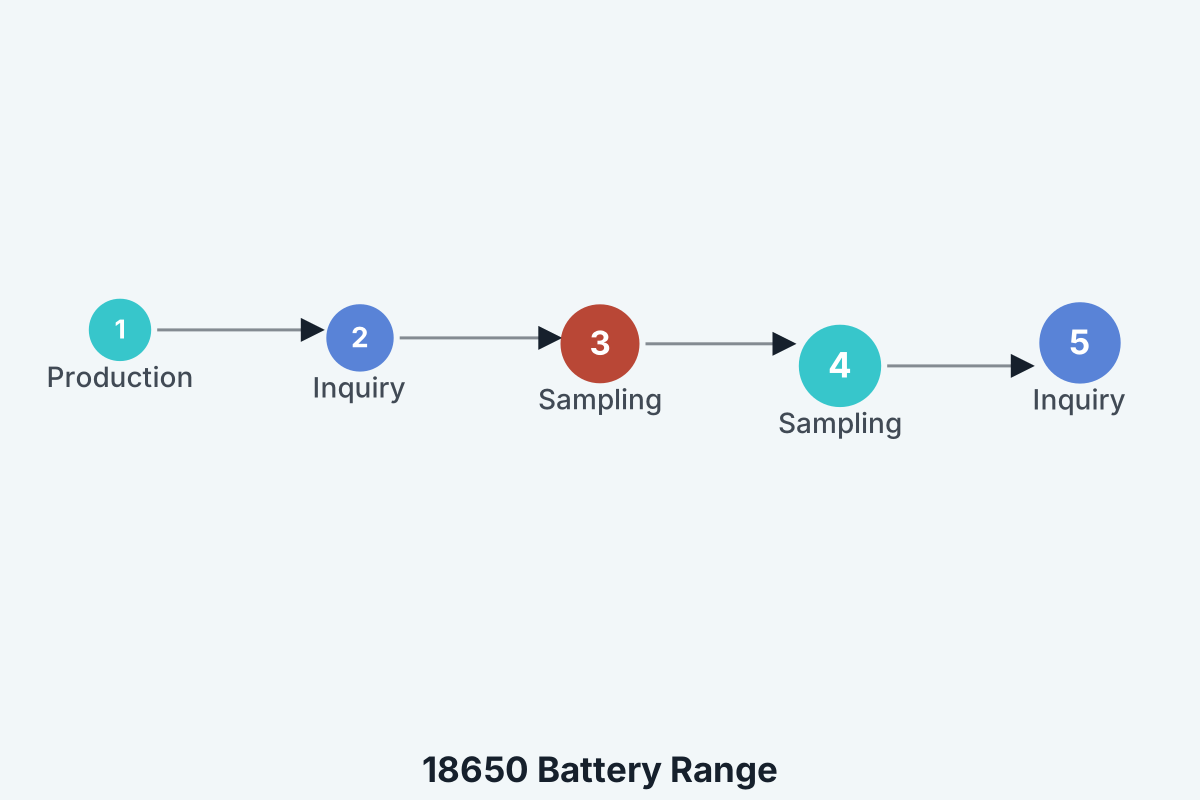
Practical Checklist
- Plan the switch from air to sea freight before you need it.
- Rotate stock by batch code rather than by delivery date.
- Ask how the factory measures puff count, then compare like with like.
- Start with a mixed carton and let your own sell-through decide.
- Check carton dimensions against your freight quote before confirming.
- Confirm the current customs classification with your own broker.
Frequently Asked Questions
Can you match an existing product I already sell?
Often yes, provided we can measure it properly. Send a physical sample and we will report back on what can be matched, what will differ slightly, and why. An honest gap is more useful than a vague promise.
How do you handle a short shipment?
Cartons are counted and weighed before dispatch and the figures are shared with you. If something is short on arrival, the packing record and the carrier documentation are both available, which keeps the claim straightforward.
Can I mix strengths in one order?
In most cases yes, as long as each strength meets the minimum run length. Mixed strength cartons are popular with retailers building their first display because they show the full ladder without over committing.
Do you provide compliance documents?
Every shipment leaves with the documentation set relevant to your market, including batch records and test reports where required. Your local rules still determine what you must file, so confirm those with your broker before import.
Next Step
Whatever you decide, decide it against numbers you can check on arrival. That single discipline removes most of the risk from importing 18650 battery.
Related Reading
- 18650 Battery Approval Workflow From Sample to Shipment — First-Time Importers
- 18650 Battery Loyalty Effects in Repeat Categories — the Buying Desk
- 18650 Battery Working With a Local Compliance Partner — Updated for 2026
- Comparing 18650 Battery Factory Tiers and What You Get — 2026 Buyer Notes
- 18650 Battery Batch Recall Traceability in Practice — Wholesale Clubs
- 18650 Battery Retail Price Architecture Across Channels — Warehouse Teams