 VapeWholesaleHub
18650 Battery Vendor Managed Inventory Possibilities — Low Minimum Quantities
Most first time importers of 18650 battery ask the same five questions. This page answers them in the order they usually arrive, with the numbers we quote internally rather than round marketing claims.
Pricing and Margin
Build 18650 battery price tiers around order sizes your customers actually place. Tiers that only make sense on a spreadsheet get ignored, and you end up discounting ad hoc instead.
Indicative reference points for planning purposes: entry tier from USD 0.89 per unit at 500 units, mid tier at USD 1.70, and volume tier at USD 0.78 for full container quantities. These figures move with specification, packaging and freight, so treat them as a shape rather than a quote.
Quality Control in Practice
Set the 18650 battery complaint threshold in the contract before you need it. Deciding what counts as an acceptable defect rate during a dispute is the worst possible time to negotiate it.
- Start with a mixed carton and let your own sell-through decide.
- Agree the tolerance band in writing before approving artwork.
- Check carton dimensions against your freight quote before confirming.
- Ask how the factory measures puff count, then compare like with like.
- Keep sealed retained samples from every production batch.
Where 18650 Battery Sits in the Range
Range decisions for 18650 battery should start from shelf space, not from a supplier catalogue. Count the facings you actually have, then decide how many of them this line deserves against what it currently earns.
Category planning for 18650 battery works best when you map it against three shopper types: the restocker who already knows what they want, the switcher who wants something stronger, and the explorer who buys on flavour name alone.
Logistics That Protect Margin
Track 18650 battery landed cost per unit as a running number, including duty and local delivery. It is the only figure that tells you whether a supplier change actually improved anything.
Model 18650 battery freight both ways before choosing a method: cost per unit and cost per week of delay. The second figure is the one that decides whether a cheap option was actually cheap.
Where Demand Is Heading
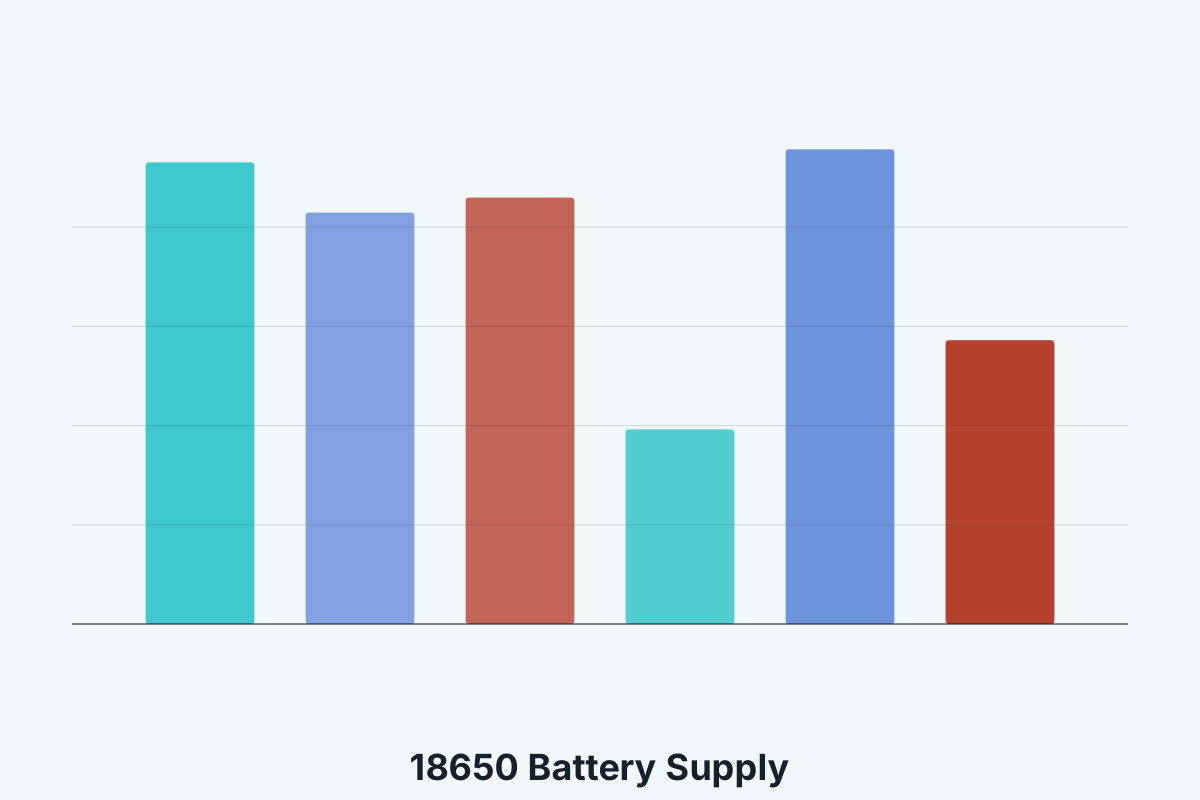
The most durable 18650 battery lines over the last few years have been unglamorous and consistent. Novelty sells once; reliability sells every month.
One shift worth planning for: shorter 18650 battery reorder cycles with smaller average drops. It favours suppliers with flexible production slots over those who only want large annual commitments.
What to Fix Before Approving 18650 Battery
Pay attention to how a 18650 battery supplier responds when you ask for a tolerance they do not want to commit to. The hesitation is usually more informative than the eventual answer.
| Product category | Pod system |
|---|---|
| Resistance band | 0.6 - 0.8 ohm |
| Capacity tolerance | +/- 3% |
| Puff count method | Machine cycle 3s on / 27s off |
| Master carton | 240 units |
| Carton weight | 5.8 kg |
| Shelf life | 24 months |
| Storage | 15-25 C, dry, away from direct light |
Practical Checklist
- Agree the tolerance band in writing before approving artwork.
- Start with a mixed carton and let your own sell-through decide.
- Plan the switch from air to sea freight before you need it.
- Keep sealed retained samples from every production batch.
- Check carton dimensions against your freight quote before confirming.
- Model landed cost, not ex-works price, when comparing quotes.
Frequently Asked Questions
How are price changes handled on repeat orders?
{K} pricing is reviewed against input costs and volume rather than adjusted casually. Any change is confirmed in writing before the next order is scheduled, with the reason stated so you can judge it yourself.
What information do you need to quote?
Target specification, approximate quantity, destination and any packaging requirement. With those four we can usually come back with a costed option the same working day rather than a request for more information.
What if I only need a small first order?
That is normal and sensible. A mixed carton lets you test 18650 battery in your own market before committing to a production run, and the specification you approve at that stage carries through to larger orders unchanged.
How should 18650 battery be stored?
Cool, dry and out of direct sunlight. Heat and light are the two things that shorten shelf life fastest. Rotate stock by batch code rather than by arrival date, and keep cartons off concrete floors in humid warehouses.
Next Step
Whatever you decide, decide it against numbers you can check on arrival. That single discipline removes most of the risk from importing 18650 battery.
Related Reading
- 18650 Battery Packaging Formats That Reduce Damage Claims — the Middle East
- 18650 Battery Electronic Data Interchange for Large Accounts — Latin America
- Wholesale 18650 Battery: A Practical Buying Guide for Retailers — UK and Ireland
- 18650 Battery Vendor Managed Inventory Possibilities — 2026 Edition
- 18650 Battery Planogram Basics for Wall Displays — Landed Cost Worked Through
- 18650 Battery Shelf Rotation for Multi Site Retailers — Low Minimum Quantities