 VapeWholesaleHub
18650 Battery Tooling and Moulding Cost Structures — First-Time Importers
The most expensive 18650 battery mistake is not paying too much per unit. It is discovering after three months that the line cannot be reordered to the same standard. Consistency is the actual product.
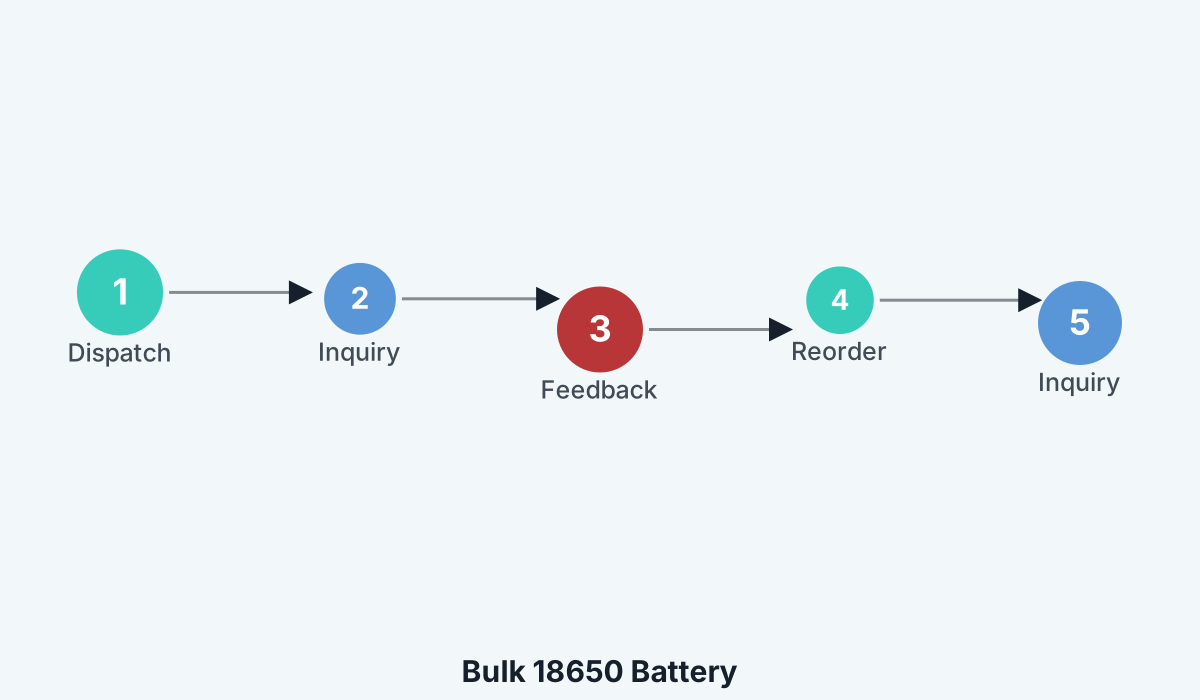
Positioning 18650 Battery on Your Shelf
Before anything else, decide which customer you are buying 18650 battery for. A convenience counter with limited shelf depth needs a tight range that turns quickly, while a specialist shop can carry a deeper ladder of options and educate buyers into higher ticket lines.
Getting 18650 Battery to Your Warehouse
Ask your forwarder for the 18650 battery transit history on your lane, not the advertised schedule. The gap between the two is the buffer you should build into your reorder point.
Merchandising and Listing Tips
Keep the 18650 battery range tidy. A half empty shelf reads as a dying line, and customers interpret it that way faster than any signage can correct.
Quality Control in Practice
Most defects in 18650 battery are not dramatic. They are loose tolerances, a slightly thin seal, a mouthpiece that clicks. Left alone they turn into leak complaints, which are the single most common reason a retailer drops a line.
- Agree the tolerance band in writing before approving artwork.
- Model landed cost, not ex-works price, when comparing quotes.
- Keep sealed retained samples from every production batch.
- Check carton dimensions against your freight quote before confirming.
- Write the complaint threshold into the order terms.
Pricing and Margin
When 18650 battery input costs move, ask which component moved. A generic price increase hides whether you are paying for cells, packaging or simply a busy production calendar.
Indicative reference points for planning purposes: entry tier from USD 1.88 per unit at 500 units, mid tier at USD 1.10, and volume tier at USD 0.50 for full container quantities. These figures move with specification, packaging and freight, so treat them as a shape rather than a quote.
Practical Checklist
- Ask how the factory measures puff count, then compare like with like.
- Plan the switch from air to sea freight before you need it.
- Write the complaint threshold into the order terms.
- Start with a mixed carton and let your own sell-through decide.
- Agree the tolerance band in writing before approving artwork.
- Model landed cost, not ex-works price, when comparing quotes.
Frequently Asked Questions
Can I mix strengths in one order?
In most cases yes, as long as each strength meets the minimum run length. Mixed strength cartons are popular with retailers building their first display because they show the full ladder without over committing.
What happens if my market changes its rules?
Regulations move, and packaging or documentation sometimes has to follow. We keep approved artwork files on hand so that a required change is a reprint rather than a redesign, which keeps the cost and delay down.
Do you provide compliance documents?
Every shipment leaves with the documentation set relevant to your market, including batch records and test reports where required. Your local rules still determine what you must file, so confirm those with your broker before import.
What information do you need to quote?
Target specification, approximate quantity, destination and any packaging requirement. With those four we can usually come back with a costed option the same working day rather than a request for more information.
Next Step
Questions that are not answered here are usually the interesting ones. Reach out with the specifics of your market and we will answer with numbers rather than adjectives.
Related Reading
- 18650 Battery Batch Recall Traceability in Practice — Repeat Orders
- 18650 Battery Airflow Design and Customer Perception — Oceania
- 18650 Battery Customer Education That Reduces Complaints — a Printable Checklist
- 18650 Battery Handling Product Recalls Professionally — Landed Cost Worked Through
- 18650 Battery Market Entry Checklist for New Territories — Convenience Retail
- 18650 Battery Lead Time Buffers That Actually Work — a Factory Floor View