 VapeWholesaleHub
18650 Battery Sample Approval Meeting Agenda — Freight Included
Treat 18650 battery as a repeat purchase category rather than a one off buy. That single change in framing alters almost every decision downstream, from carton size to how many strengths you list.
Positioning 18650 Battery on Your Shelf
Decide early whether 18650 battery is a traffic driver or a margin line in your store. The answer changes how you price it, where you place it and how hard you push it at the counter.
Inspection Before Dispatch
Keep a photo record of every 18650 battery approval sample. Written descriptions age badly; a dated photograph next to a delivered unit settles most arguments in seconds.
Inspection is only useful if the result is recorded somewhere you can find it later. A 18650 battery batch log with weights, codes and measurements turns a future complaint into a five minute lookup.
- Check carton dimensions against your freight quote before confirming.
- Keep sealed retained samples from every production batch.
- Start with a mixed carton and let your own sell-through decide.
- Rotate stock by batch code rather than by delivery date.
- Agree the tolerance band in writing before approving artwork.
Turning 18650 Battery Into Repeats
A 18650 battery display that answers strength and flavour without staff involvement outsells a prettier one that does not. Most customers will not ask, so the fixture has to do the work.
What 18650 Battery Really Costs Landed
Margin on 18650 battery is rarely lost at the till. It is lost through dead stock, returns and emergency air freight. A slightly higher landed cost with predictable lead time usually beats the cheapest quote on the spreadsheet.
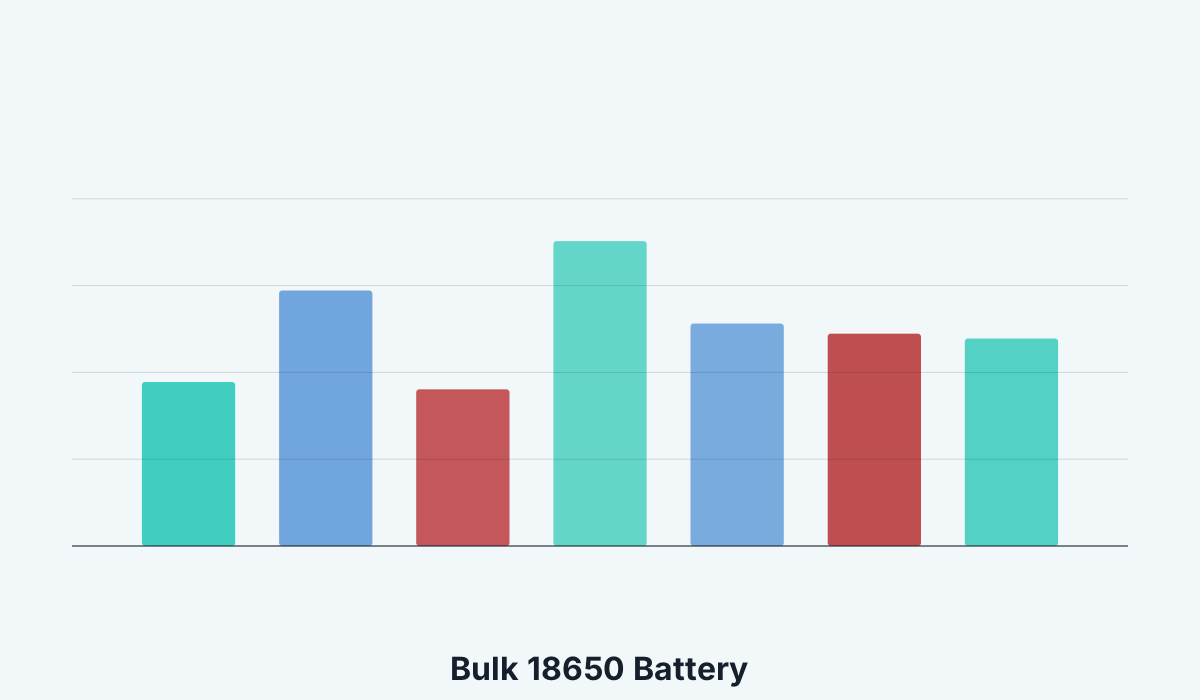
Indicative reference points for planning purposes: entry tier from USD 1.00 per unit at 500 units, mid tier at USD 1.26, and volume tier at USD 0.86 for full container quantities. These figures move with specification, packaging and freight, so treat them as a shape rather than a quote.
What to Fix Before Approving 18650 Battery
Specification sheets are where a 18650 battery deal is won or quietly lost. Two samples can look and taste the same while using different coil wire, different wicking density and different tolerances on the mouthpiece. Those details decide how the unit behaves in week three rather than minute three.
Ask for the 18650 battery specification in the same units you intend to measure in. A metric quoted in a form you cannot verify on arrival is not a specification, it is a claim.
| Product category | Pod system |
|---|---|
| Resistance band | 0.8 - 1.0 ohm |
| Capacity tolerance | +/- 2% |
| Puff count method | Machine cycle 3s on / 27s off |
| Master carton | 120 units |
| Carton weight | 10.2 kg |
| Shelf life | 18 months |
| Storage | 15-25 C, dry, away from direct light |
Practical Checklist
- Ask how the factory measures puff count, then compare like with like.
- Check carton dimensions against your freight quote before confirming.
- Plan the switch from air to sea freight before you need it.
- Keep sealed retained samples from every production batch.
- Rotate stock by batch code rather than by delivery date.
- Agree the tolerance band in writing before approving artwork.
Frequently Asked Questions
Is there support for in-store material?
Yes. Shelf talkers, counter cards and simple planogram suggestions are available for 18650 battery ranges that reach a sensible volume. Most retailers find the plain strength and flavour cards do the most work.
Do you provide compliance documents?
Every shipment leaves with the documentation set relevant to your market, including batch records and test reports where required. Your local rules still determine what you must file, so confirm those with your broker before import.
How do you handle a short shipment?
Cartons are counted and weighed before dispatch and the figures are shared with you. If something is short on arrival, the packing record and the carrier documentation are both available, which keeps the claim straightforward.
Can I visit the production facility?
Yes, and we encourage it for larger programmes. Visits are most useful when you already have a draft specification, because you can then check the specific processes behind the numbers you care about.
Next Step
Whatever you decide, decide it against numbers you can check on arrival. That single discipline removes most of the risk from importing 18650 battery.
Related Reading
- 18650 Battery Finish Options and Perceived Quality — 2026 Edition
- 18650 Battery Monthly Review Ritual for Buyers — Cross-Border Trade
- Reducing Returns on 18650 Battery Through Better Specs — a Printable Checklist
- 18650 Battery Child Resistant Closure Considerations — Step by Step
- 18650 Battery When to Add a Second Factory — EU Markets
- 18650 Battery Counterfeit Risk and Serialisation — Container-Scale Orders