 VapeWholesaleHub
18650 Battery Reading Factory Capacity Honestly — Small Batch Buyers
Retailers rarely lose money on 18650 battery because of price. They lose money because the first container was bought on a photograph. This page walks through what actually matters when you source 18650 battery at scale, written from the buying desk rather than the marketing department.
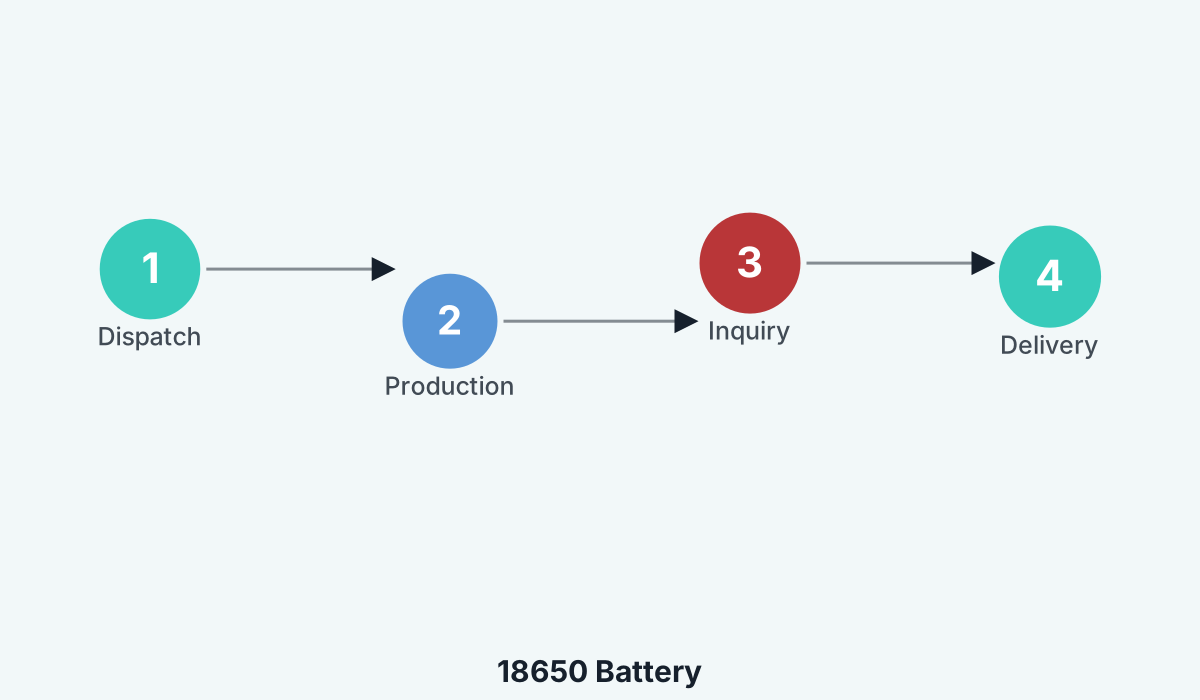
Merchandising and Listing Tips
Put 18650 battery where the decision is made, not where the margin is highest. In most stores that means near the counter or at eye level in the category, rather than wherever there is spare space.
Staff knowledge moves 18650 battery more than any fixture. A two minute explanation of the difference between this line and the one next to it converts a browsing shopper into a repeat buyer far more reliably than a discount.
Market Signals
One visible change in 18650 battery is the move towards clearer labelling and traceability. Retailers who adopted batch coding early are finding it much easier to work with larger distributors now.
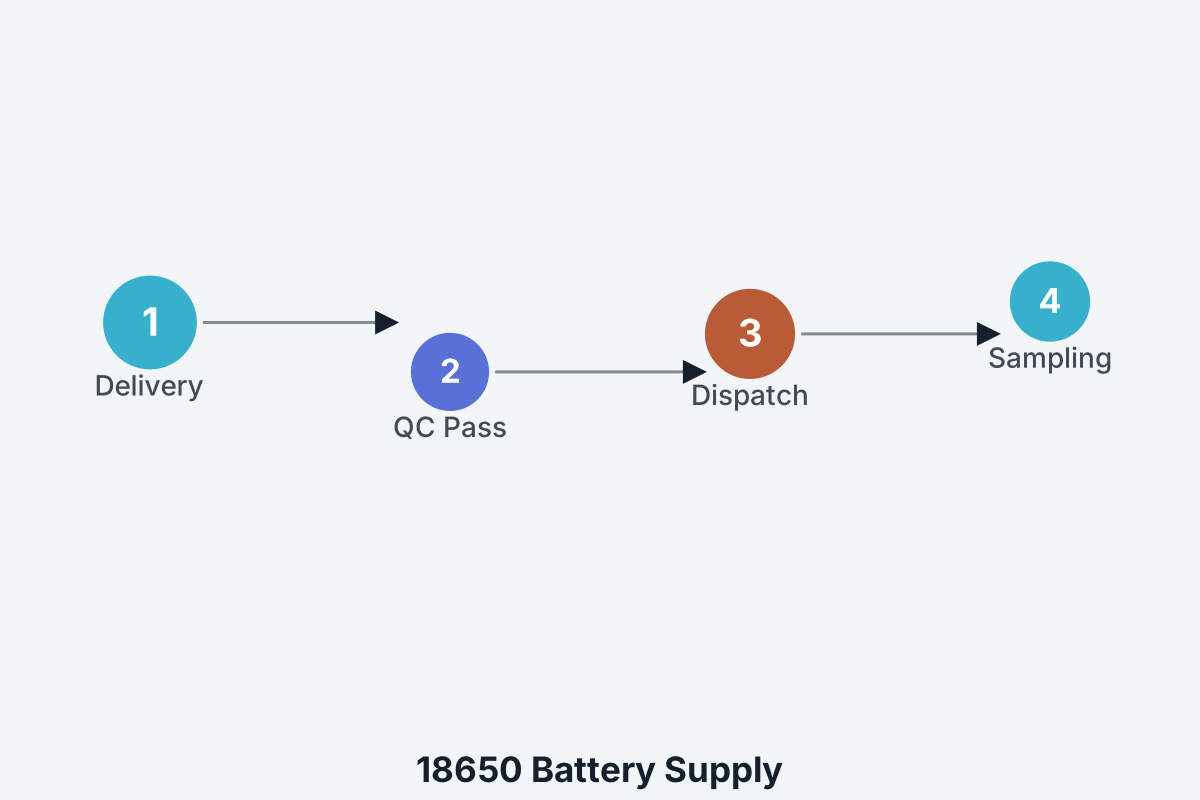
Pricing and Margin
When 18650 battery input costs move, ask which component moved. A generic price increase hides whether you are paying for cells, packaging or simply a busy production calendar.
Discounting 18650 battery to win shelf space tends to reset customer expectations permanently. Volume support in kind, such as display material, usually costs less in the long run.
Indicative reference points for planning purposes: entry tier from USD 2.26 per unit at 1000 units, mid tier at USD 1.48, and volume tier at USD 1.08 for full container quantities. These figures move with specification, packaging and freight, so treat them as a shape rather than a quote.
The Specification That Matters
Good 18650 battery specs describe the failure boundaries, not just the target. Stating what is unacceptable gives the factory a clear production window instead of a single point they will miss half the time.
When we write a 18650 battery specification with a distributor, we fix four things first: the resistance band, the liquid capacity tolerance, the puff count methodology and the packaging master carton. Everything else can flex without changing the customer experience.
| Product category | Closed pod |
|---|---|
| Resistance band | 1.2 - 1.4 ohm |
| Capacity tolerance | +/- 5% |
| Puff count method | Machine cycle 3s on / 27s off |
| Master carton | 120 units |
| Carton weight | 9.4 kg |
| Shelf life | 12 months |
| Storage | 15-25 C, dry, away from direct light |
Getting 18650 Battery to Your Warehouse
Air freight makes sense for a first 18650 battery order when you need to test demand quickly, but almost every steady programme moves to sea freight once volumes stabilise. Planning that switch early avoids a painful margin squeeze later.
How 18650 Battery Batches Are Checked
Set the 18650 battery complaint threshold in the contract before you need it. Deciding what counts as an acceptable defect rate during a dispute is the worst possible time to negotiate it.
The defect rate that matters is the one your customer experiences, not the one the factory reports. Bridge that gap by inspecting the way a customer would open the box, not the way a line worker packs it.
- Agree the tolerance band in writing before approving artwork.
- Keep sealed retained samples from every production batch.
- Rotate stock by batch code rather than by delivery date.
- Start with a mixed carton and let your own sell-through decide.
- Confirm the current customs classification with your own broker.
Practical Checklist
- Rotate stock by batch code rather than by delivery date.
- Agree the tolerance band in writing before approving artwork.
- Check carton dimensions against your freight quote before confirming.
- Confirm the current customs classification with your own broker.
- Start with a mixed carton and let your own sell-through decide.
- Write the complaint threshold into the order terms.
Frequently Asked Questions
How do you handle a short shipment?
Cartons are counted and weighed before dispatch and the figures are shared with you. If something is short on arrival, the packing record and the carrier documentation are both available, which keeps the claim straightforward.
How are price changes handled on repeat orders?
{K} pricing is reviewed against input costs and volume rather than adjusted casually. Any change is confirmed in writing before the next order is scheduled, with the reason stated so you can judge it yourself.
What if a batch does not match the sample?
Keep the retained samples from the approval stage. If a delivered batch measurably differs, we compare against the retained set and resolve it against the production record. This is why we insist on sealed retained units from every run.
Can I visit the production facility?
Yes, and we encourage it for larger programmes. Visits are most useful when you already have a draft specification, because you can then check the specific processes behind the numbers you care about.
Next Step
Whatever you decide, decide it against numbers you can check on arrival. That single discipline removes most of the risk from importing 18650 battery.
Related Reading
- 18650 Battery First Order Playbook for New Importers — Repeat Orders
- 18650 Battery Safety Stock Levels for Import Programmes — Tight Margin Categories
- 18650 Battery Promotional Mechanics That Do Not Erode Value — Retail Chains
- Understanding 18650 Battery Manufacturing From the Inside — Before Your Next Order
- Setting Minimum Order Quantities for 18650 Battery — Step by Step
- How to Choose 18650 Battery Without Overpaying — EU Markets