 VapeWholesaleHub
18650 Battery Packaging Refresh Without Losing Recognition — Warehouse Teams
The most expensive 18650 battery mistake is not paying too much per unit. It is discovering after three months that the line cannot be reordered to the same standard. Consistency is the actual product.
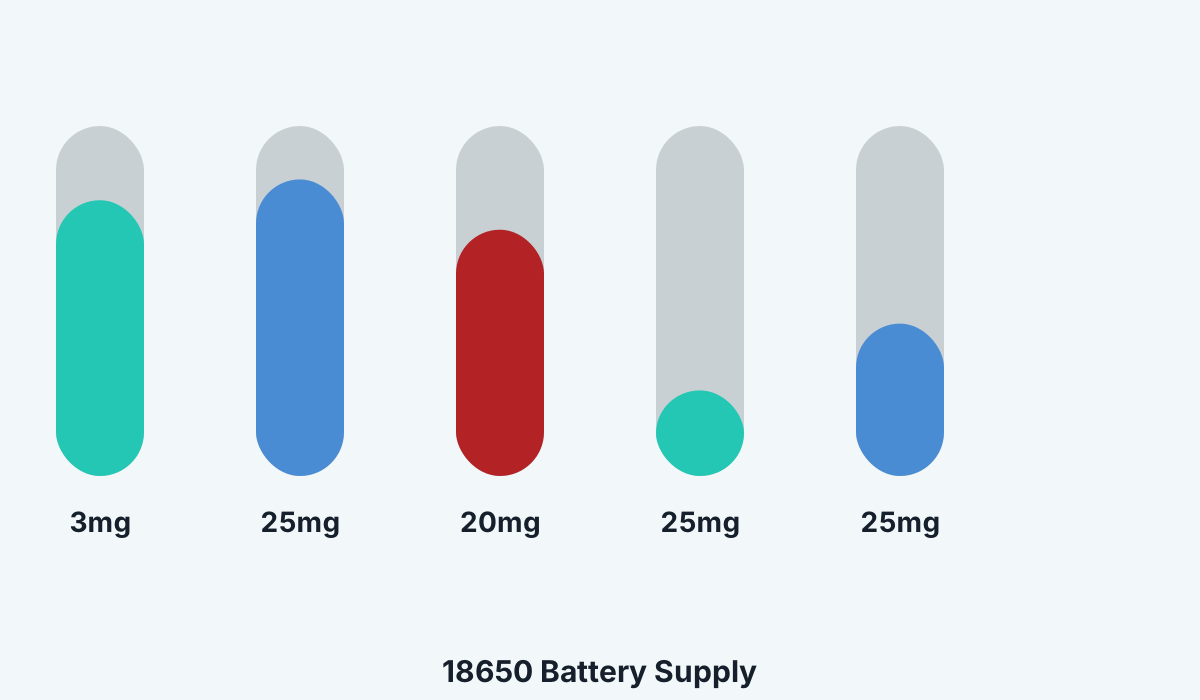
Reading a 18650 Battery Spec Sheet
When we write a 18650 battery specification with a distributor, we fix four things first: the resistance band, the liquid capacity tolerance, the puff count methodology and the packaging master carton. Everything else can flex without changing the customer experience.
Ask for the 18650 battery specification in the same units you intend to measure in. A metric quoted in a form you cannot verify on arrival is not a specification, it is a claim.
| Product category | Closed pod |
|---|---|
| Resistance band | 0.8 - 1.0 ohm |
| Capacity tolerance | +/- 2% |
| Puff count method | Machine cycle 2s on / 18s off |
| Master carton | 120 units |
| Carton weight | 7.6 kg |
| Shelf life | 24 months |
| Storage | 15-25 C, dry, away from direct light |
Trends Worth Watching
One shift worth planning for: shorter 18650 battery reorder cycles with smaller average drops. It favours suppliers with flexible production slots over those who only want large annual commitments.
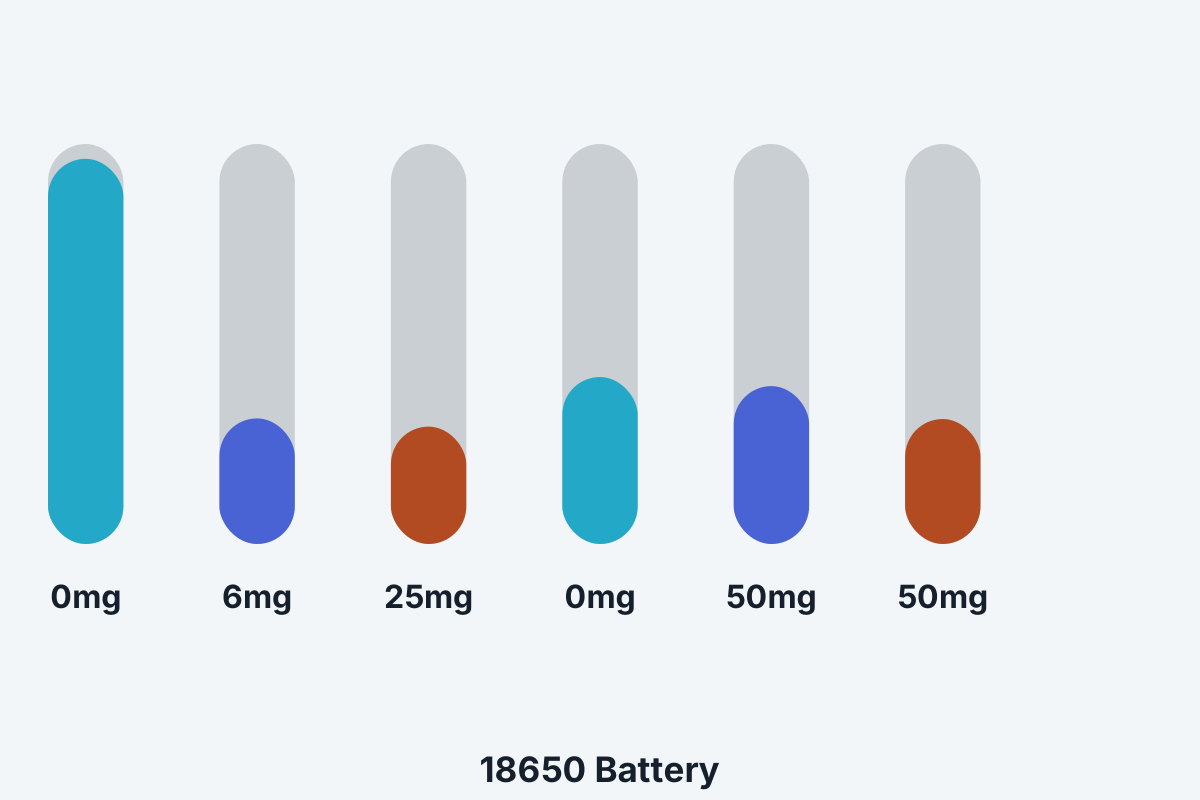
Where 18650 Battery Sits in the Range
18650 Battery rewards retailers who can explain it in one sentence. If your team needs a paragraph, the range is too complicated for the space it occupies.
Freight, Customs and Timing
Track 18650 battery landed cost per unit as a running number, including duty and local delivery. It is the only figure that tells you whether a supplier change actually improved anything.
Pricing and Margin
Hold a small 18650 battery buffer in your pricing model for currency movement. A few percent on a container is a real number, and it is easier to plan for than to absorb.
Build 18650 battery price tiers around order sizes your customers actually place. Tiers that only make sense on a spreadsheet get ignored, and you end up discounting ad hoc instead.
Indicative reference points for planning purposes: entry tier from USD 1.36 per unit at 2000 units, mid tier at USD 1.72, and volume tier at USD 0.78 for full container quantities. These figures move with specification, packaging and freight, so treat them as a shape rather than a quote.
Inspection Before Dispatch
Train whoever receives 18650 battery cartons to note anything unusual at the point of unloading. Damage discovered at the dock is a freight claim; damage discovered a week later is your problem.
Keep a photo record of every 18650 battery approval sample. Written descriptions age badly; a dated photograph next to a delivered unit settles most arguments in seconds.
- Confirm the current customs classification with your own broker.
- Agree the tolerance band in writing before approving artwork.
- Plan the switch from air to sea freight before you need it.
- Ask how the factory measures puff count, then compare like with like.
- Start with a mixed carton and let your own sell-through decide.
Practical Checklist
- Agree the tolerance band in writing before approving artwork.
- Rotate stock by batch code rather than by delivery date.
- Ask how the factory measures puff count, then compare like with like.
- Check carton dimensions against your freight quote before confirming.
- Confirm the current customs classification with your own broker.
- Plan the switch from air to sea freight before you need it.
Frequently Asked Questions
What information do you need to quote?
Target specification, approximate quantity, destination and any packaging requirement. With those four we can usually come back with a costed option the same working day rather than a request for more information.
What if a batch does not match the sample?
Keep the retained samples from the approval stage. If a delivered batch measurably differs, we compare against the retained set and resolve it against the production record. This is why we insist on sealed retained units from every run.
What does a sample pack usually include?
A typical 18650 battery sample pack covers the strengths or variants you are most likely to list, packed so you can evaluate them side by side. Tell us which lines you are considering and we will match the pack to that rather than sending a generic selection.
Can the packaging be customised?
Yes. Most 18650 battery programmes use private label packaging once volumes justify the printing plate. We supply dielines, check your artwork for print issues and hold approved files so reorders need no new setup.
What is the usual minimum order for 18650 battery?
For a standard production run the minimum is normally one master carton per flavour, though mixed cartons can be arranged for a first order. If you are testing the line, ask about a sample pack first and treat the freight as part of your research budget.
Next Step
Send us your current 18650 battery specification even if you are not planning to move suppliers. A second read of a document you use every month is usually worth the ten minutes.
Related Reading
- 18650 Battery Age Verification at the Point of Sale — UK and Ireland
- 18650 Battery Insurance Valuation for Held Stock — Convenience Retail
- 18650 Battery Coil Wire and Wicking Choices Compared — Oceania
- 18650 Battery Packaging Formats That Reduce Damage Claims — Step by Step
- 18650 Battery Quality Control: Tests We Run Before Dispatch — UK and Ireland
- Sustainability and Take Back Programmes for 18650 Battery — 2026 Buyer Notes