 VapeWholesaleHub
18650 Battery Order Consolidation Across Suppliers — Repeat Orders
Treat 18650 battery as a repeat purchase category rather than a one off buy. That single change in framing alters almost every decision downstream, from carton size to how many strengths you list.
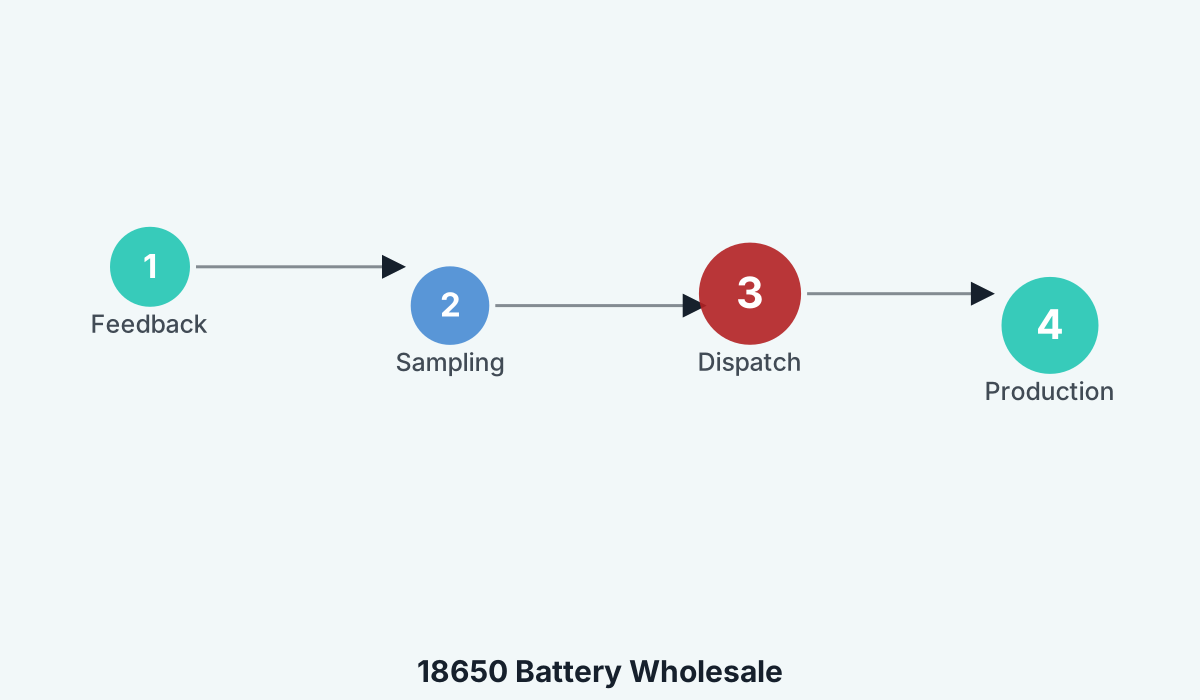
The Specification That Matters
When we write a 18650 battery specification with a distributor, we fix four things first: the resistance band, the liquid capacity tolerance, the puff count methodology and the packaging master carton. Everything else can flex without changing the customer experience.
Two specifications that matter more than buyers expect: the seal integrity after a drop test and the consistency of the draw from first use to last. Both are measurable before you commit to volume.
| Product category | Pod system |
|---|---|
| Resistance band | 1.0 - 1.2 ohm |
| Capacity tolerance | +/- 3% |
| Puff count method | Machine cycle 2s on / 18s off |
| Master carton | 240 units |
| Carton weight | 9.9 kg |
| Shelf life | 12 months |
| Storage | 15-25 C, dry, away from direct light |
Inspection Before Dispatch
Incoming inspection for 18650 battery is not about opening boxes at random. We weigh a sample of cartons, check batch codes against the production record, run a draw resistance measurement, and log the results so that a complaint three months later can be traced to a specific run.
- Write the complaint threshold into the order terms.
- Keep sealed retained samples from every production batch.
- Start with a mixed carton and let your own sell-through decide.
- Check carton dimensions against your freight quote before confirming.
- Confirm the current customs classification with your own broker.
Modelling a Healthy Margin
When you model 18650 battery pricing, build in a realistic shrink figure. Even a well run line loses a small percentage to damage, expiry and sampling. Pretending that number is zero is how a healthy looking margin turns negative.
When 18650 battery input costs move, ask which component moved. A generic price increase hides whether you are paying for cells, packaging or simply a busy production calendar.
Indicative reference points for planning purposes: entry tier from USD 1.63 per unit at 1000 units, mid tier at USD 1.32, and volume tier at USD 1.49 for full container quantities. These figures move with specification, packaging and freight, so treat them as a shape rather than a quote.
Positioning 18650 Battery on Your Shelf
Category data for 18650 battery is noisier than it looks. Promotions, weather and local competition all move weekly numbers, so read three months at a time rather than reacting to a single week.
Selling 18650 Battery at Store Level
Put 18650 battery where the decision is made, not where the margin is highest. In most stores that means near the counter or at eye level in the category, rather than wherever there is spare space.
Where Demand Is Heading
Flavour cycles in 18650 battery are shortening, which argues for smaller test orders and faster feedback loops rather than large speculative buys on a predicted winner.
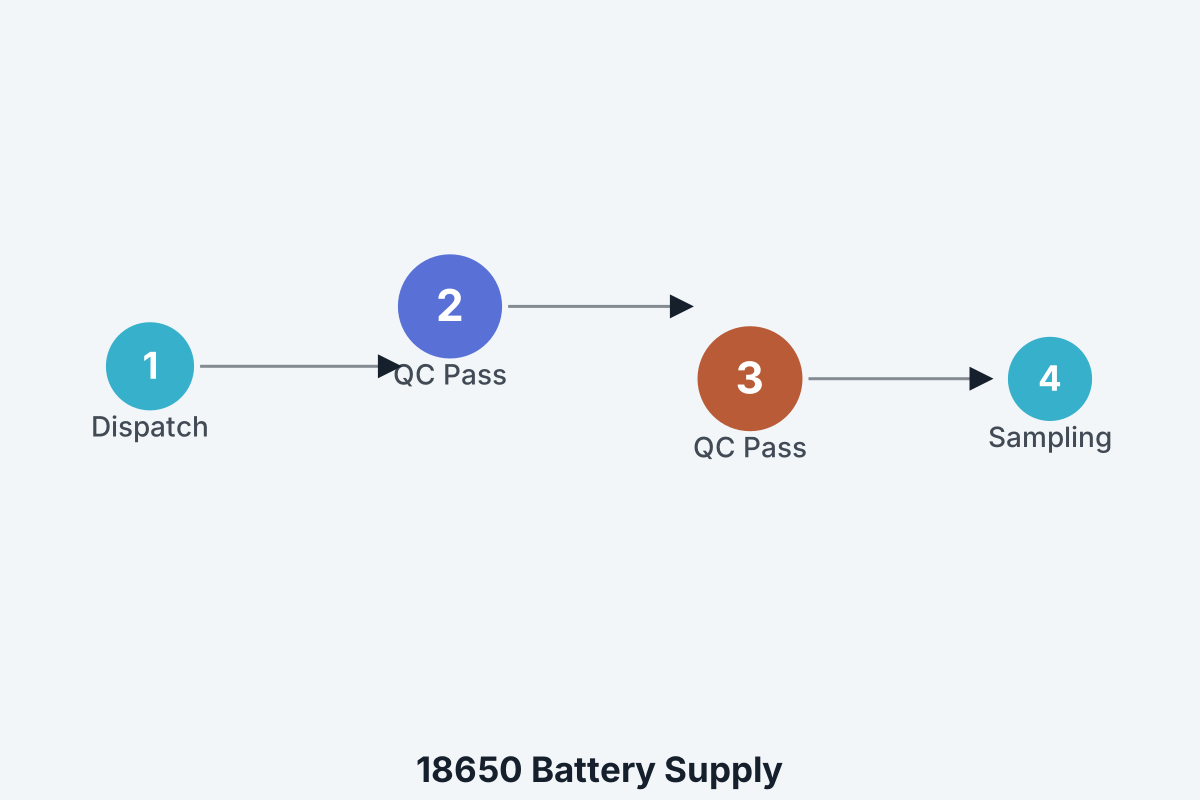
Practical Checklist
- Rotate stock by batch code rather than by delivery date.
- Model landed cost, not ex-works price, when comparing quotes.
- Plan the switch from air to sea freight before you need it.
- Check carton dimensions against your freight quote before confirming.
- Start with a mixed carton and let your own sell-through decide.
- Ask how the factory measures puff count, then compare like with like.
Frequently Asked Questions
What if a batch does not match the sample?
Keep the retained samples from the approval stage. If a delivered batch measurably differs, we compare against the retained set and resolve it against the production record. This is why we insist on sealed retained units from every run.
How are price changes handled on repeat orders?
{K} pricing is reviewed against input costs and volume rather than adjusted casually. Any change is confirmed in writing before the next order is scheduled, with the reason stated so you can judge it yourself.
Is there support for in-store material?
Yes. Shelf talkers, counter cards and simple planogram suggestions are available for 18650 battery ranges that reach a sensible volume. Most retailers find the plain strength and flavour cards do the most work.
Can you match an existing product I already sell?
Often yes, provided we can measure it properly. Send a physical sample and we will report back on what can be matched, what will differ slightly, and why. An honest gap is more useful than a vague promise.
What does a sample pack usually include?
A typical 18650 battery sample pack covers the strengths or variants you are most likely to list, packed so you can evaluate them side by side. Tell us which lines you are considering and we will match the pack to that rather than sending a generic selection.
Next Step
Whatever you decide, decide it against numbers you can check on arrival. That single discipline removes most of the risk from importing 18650 battery.
Related Reading
- 18650 Battery Growing From Pallet to Container — North America
- Digital Marketing Playbook for 18650 Battery Sellers — the Buying Desk
- 18650 Battery Pallet Configuration for Mixed Orders — High Volume Buyers
- 18650 Battery When to Add a Second Factory — Small Batch Buyers
- 18650 Battery Handling, Labeling and Regulatory Paperwork — Latin America
- 18650 Battery Currency and Payment Risk Basics — Real Numbers Only