 VapeWholesaleHub
18650 Battery Market Entry Checklist for New Territories — First-Time Importers
There is a version of 18650 battery that sells through in six weeks and a version that sits in a back room for a year. The difference is rarely obvious from a product photo. Below is the checklist our team uses when a distributor asks us to quote 18650 battery for the first time.
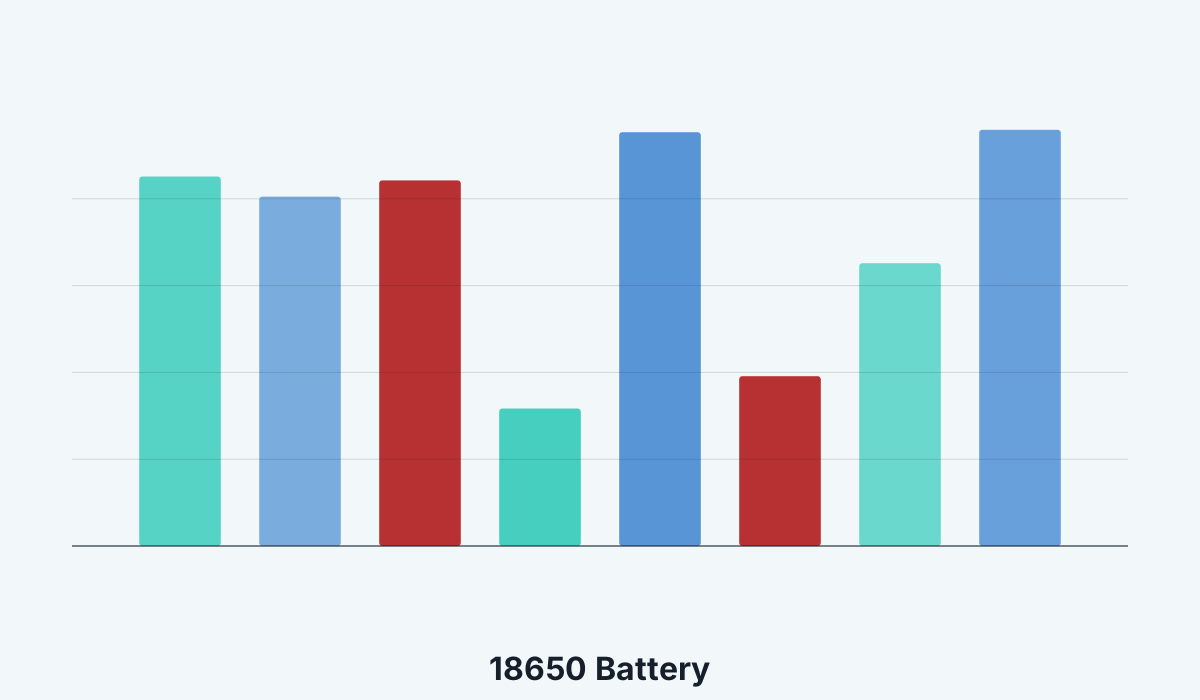
Turning 18650 Battery Into Repeats
Put 18650 battery where the decision is made, not where the margin is highest. In most stores that means near the counter or at eye level in the category, rather than wherever there is spare space.
Where Demand Is Heading
One shift worth planning for: shorter 18650 battery reorder cycles with smaller average drops. It favours suppliers with flexible production slots over those who only want large annual commitments.
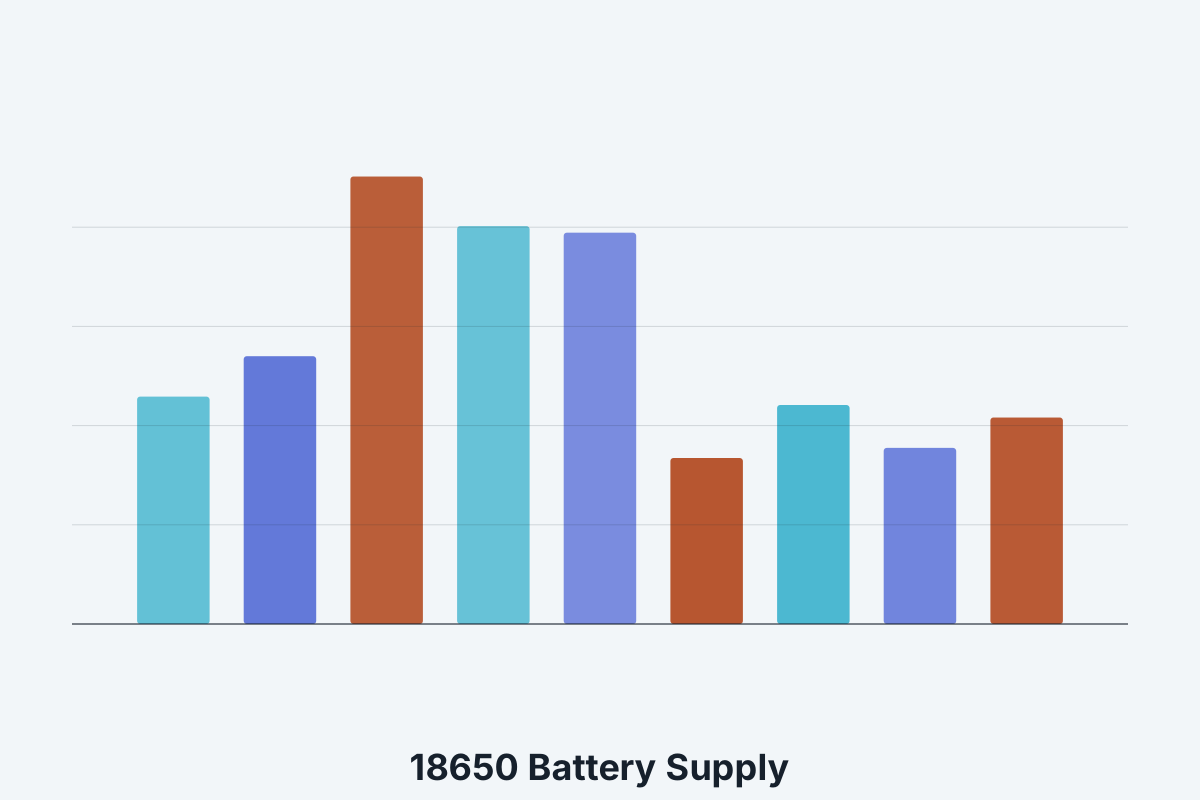
What 18650 Battery Really Costs Landed
Compare 18650 battery quotes on the same incoterm. A price that looks better because it excludes a cost you assumed was included is not a saving at all.
Hold a small 18650 battery buffer in your pricing model for currency movement. A few percent on a container is a real number, and it is easier to plan for than to absorb.
Indicative reference points for planning purposes: entry tier from USD 2.33 per unit at 1000 units, mid tier at USD 1.37, and volume tier at USD 1.06 for full container quantities. These figures move with specification, packaging and freight, so treat them as a shape rather than a quote.
Reading a 18650 Battery Spec Sheet
Two specifications that matter more than buyers expect: the seal integrity after a drop test and the consistency of the draw from first use to last. Both are measurable before you commit to volume.
Ask any factory for the same 18650 battery sample twice, three months apart. If the second sample drifts, the production line is running without statistical control and your reviews will drift with it. Consistency over time is a more useful signal than a single good sample.
| Product category | Pod system |
|---|---|
| Resistance band | 1.0 - 1.2 ohm |
| Capacity tolerance | +/- 5% |
| Puff count method | Machine cycle 2s on / 18s off |
| Master carton | 300 units |
| Carton weight | 11.5 kg |
| Shelf life | 24 months |
| Storage | 15-25 C, dry, away from direct light |
Quality Control in Practice
The defect rate that matters is the one your customer experiences, not the one the factory reports. Bridge that gap by inspecting the way a customer would open the box, not the way a line worker packs it.
- Start with a mixed carton and let your own sell-through decide.
- Keep sealed retained samples from every production batch.
- Agree the tolerance band in writing before approving artwork.
- Confirm the current customs classification with your own broker.
- Ask how the factory measures puff count, then compare like with like.
Practical Checklist
- Agree the tolerance band in writing before approving artwork.
- Ask how the factory measures puff count, then compare like with like.
- Write the complaint threshold into the order terms.
- Plan the switch from air to sea freight before you need it.
- Rotate stock by batch code rather than by delivery date.
- Keep sealed retained samples from every production batch.
Frequently Asked Questions
What if a batch does not match the sample?
Keep the retained samples from the approval stage. If a delivered batch measurably differs, we compare against the retained set and resolve it against the production record. This is why we insist on sealed retained units from every run.
Do you provide compliance documents?
Every shipment leaves with the documentation set relevant to your market, including batch records and test reports where required. Your local rules still determine what you must file, so confirm those with your broker before import.
Do you hold stock for regular customers?
For established programmes we can reserve production slots and, in some cases, hold finished 18650 battery stock against a forecast. It removes most of the lead time risk from a reorder and is worth discussing once volumes are stable.
Is there support for in-store material?
Yes. Shelf talkers, counter cards and simple planogram suggestions are available for 18650 battery ranges that reach a sensible volume. Most retailers find the plain strength and flavour cards do the most work.
Next Step
Nobody wins when a first order is too large to learn from. Start with a mixed carton, check how it moves in your own market, then scale the lines that earned the shelf space.
Related Reading
- 18650 Battery Counterfeit Risk and Serialisation — New Distributors
- 18650 Battery Customer Education That Reduces Complaints — Tight Margin Categories
- 18650 Battery Distributor Onboarding Steps — Wholesale Clubs
- 18650 Battery Lead Time Buffers That Actually Work — Three Price Tiers
- 18650 Battery Transport Vibration and Pack Protection — Landed Cost Worked Through
- 18650 Battery Damage Claims and How to Avoid Them — a Printable Checklist