 VapeWholesaleHub
18650 Battery Insurance Valuation for Held Stock — a Factory Floor View
A good 18650 battery programme is boring in the best sense: same taste, same draw, same carton count, every single time. Getting there requires a shared vocabulary between you and the factory. Consider this page that vocabulary.
Positioning 18650 Battery on Your Shelf
Before anything else, decide which customer you are buying 18650 battery for. A convenience counter with limited shelf depth needs a tight range that turns quickly, while a specialist shop can carry a deeper ladder of options and educate buyers into higher ticket lines.
Modelling a Healthy Margin
Discounting 18650 battery to win shelf space tends to reset customer expectations permanently. Volume support in kind, such as display material, usually costs less in the long run.
Watch the 18650 battery price you pay over a year rather than per order. Factories respond well to visible volume, and a quarterly review is usually worth more than a hard negotiation each time.
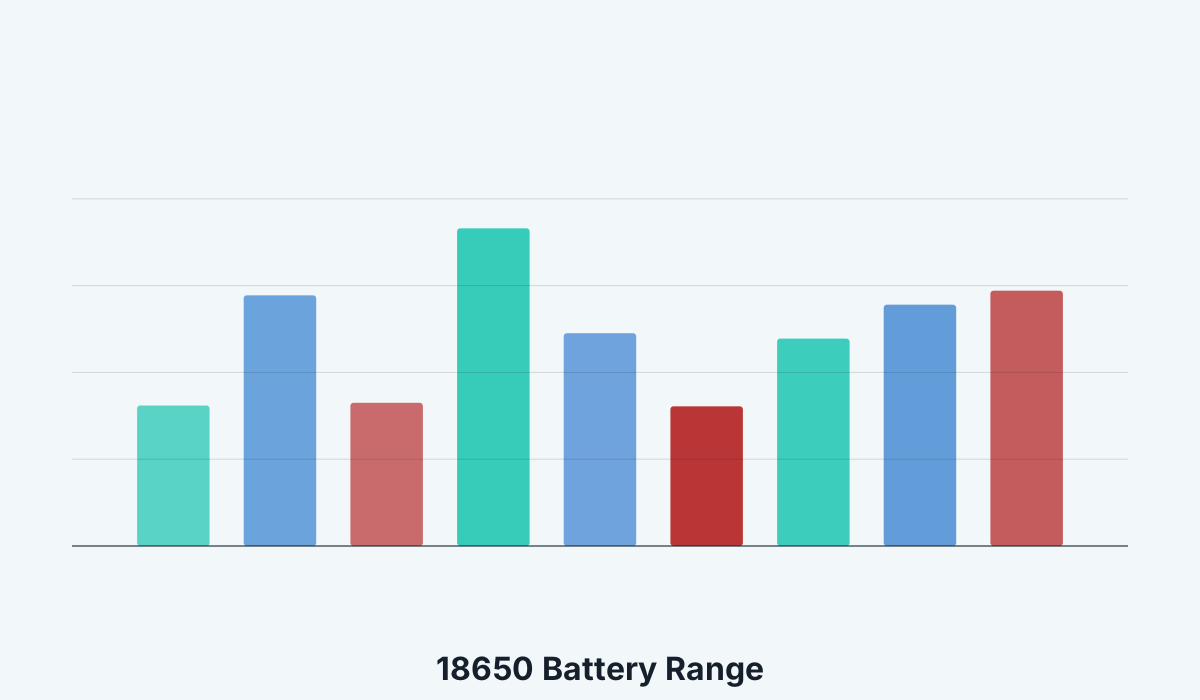
Indicative reference points for planning purposes: entry tier from USD 1.71 per unit at 2000 units, mid tier at USD 1.61, and volume tier at USD 0.76 for full container quantities. These figures move with specification, packaging and freight, so treat them as a shape rather than a quote.
Logistics That Protect Margin
Ask your forwarder for the 18650 battery transit history on your lane, not the advertised schedule. The gap between the two is the buffer you should build into your reorder point.
Inspection Before Dispatch
Most defects in 18650 battery are not dramatic. They are loose tolerances, a slightly thin seal, a mouthpiece that clicks. Left alone they turn into leak complaints, which are the single most common reason a retailer drops a line.
- Write the complaint threshold into the order terms.
- Plan the switch from air to sea freight before you need it.
- Confirm the current customs classification with your own broker.
- Start with a mixed carton and let your own sell-through decide.
- Keep sealed retained samples from every production batch.
Market Signals
Retailers report that 18650 battery customers are asking more specific questions than they did two years ago. That favours ranges with clear, simple information over ranges with clever marketing.
Expect 18650 battery packaging requirements to keep tightening. Designs that leave room for additional labelling age better than tight layouts that need a full reprint to comply.
The Specification That Matters
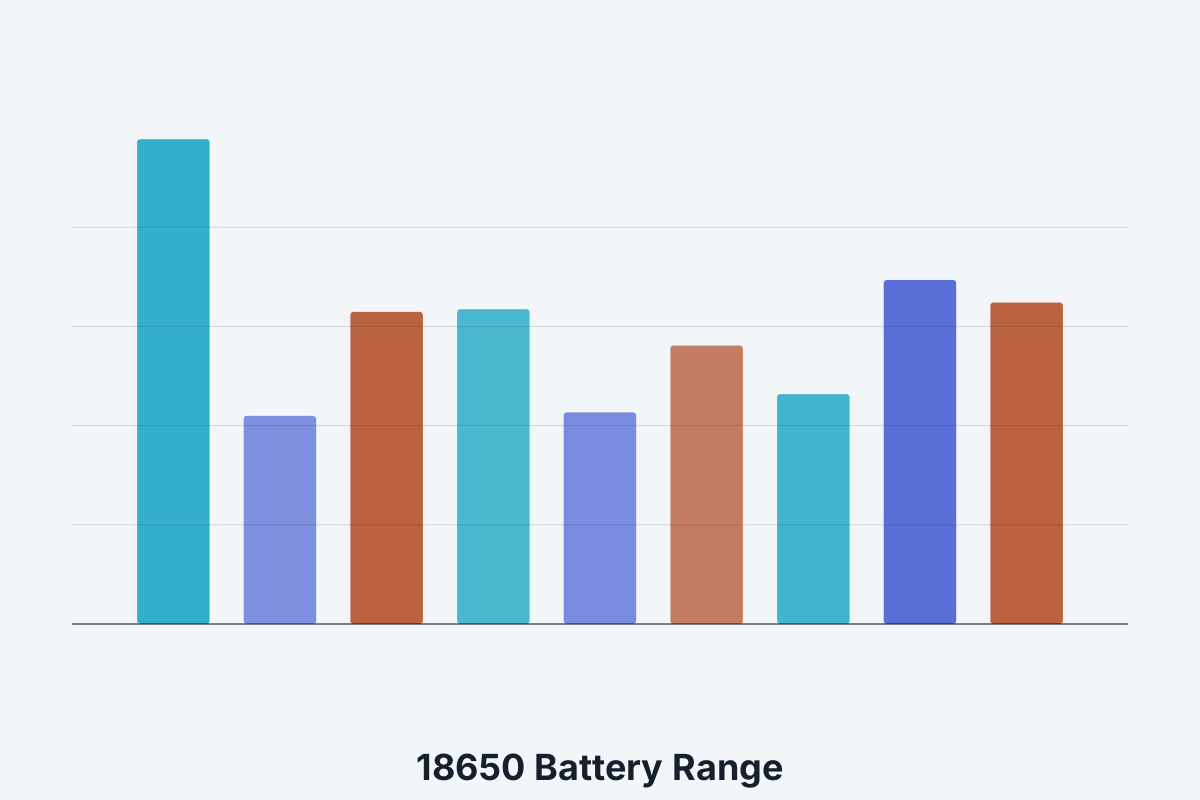
Ask for the 18650 battery specification in the same units you intend to measure in. A metric quoted in a form you cannot verify on arrival is not a specification, it is a claim.
| Product category | Pod system |
|---|---|
| Resistance band | 1.2 - 1.4 ohm |
| Capacity tolerance | +/- 5% |
| Puff count method | Declared by capacity |
| Master carton | 240 units |
| Carton weight | 3.6 kg |
| Shelf life | 24 months |
| Storage | 15-25 C, dry, away from direct light |
Practical Checklist
- Check carton dimensions against your freight quote before confirming.
- Plan the switch from air to sea freight before you need it.
- Start with a mixed carton and let your own sell-through decide.
- Write the complaint threshold into the order terms.
- Confirm the current customs classification with your own broker.
- Agree the tolerance band in writing before approving artwork.
Frequently Asked Questions
Is there support for in-store material?
Yes. Shelf talkers, counter cards and simple planogram suggestions are available for 18650 battery ranges that reach a sensible volume. Most retailers find the plain strength and flavour cards do the most work.
Can I mix strengths in one order?
In most cases yes, as long as each strength meets the minimum run length. Mixed strength cartons are popular with retailers building their first display because they show the full ladder without over committing.
What happens if my market changes its rules?
Regulations move, and packaging or documentation sometimes has to follow. We keep approved artwork files on hand so that a required change is a reprint rather than a redesign, which keeps the cost and delay down.
How long does a 18650 battery order take to arrive?
Production typically takes ten to eighteen working days after artwork approval, and transit depends on the method you choose. Air express is fastest, sea freight is cheapest at volume. We confirm both at quotation so there is no surprise later.
Next Step
Nobody wins when a first order is too large to learn from. Start with a mixed carton, check how it moves in your own market, then scale the lines that earned the shelf space.
Related Reading
- 18650 Battery Compliance Basics for Importers — Oceania
- 18650 Battery Documentation Pack for Customs Brokers — Before Your Next Order
- 18650 Battery Inventory Turnover Benchmarks for Stores — Wholesale Clubs
- How to Read a 18650 Battery Certificate of Analysis — First-Time Importers
- Setting Minimum Order Quantities for 18650 Battery — First-Time Importers
- 18650 Battery Packaging Waste and Recycling Options — Established Chains