 VapeWholesaleHub
18650 Battery Contract Clauses Worth Negotiating — the Buying Desk
Retailers rarely lose money on 18650 battery because of price. They lose money because the first container was bought on a photograph. This page walks through what actually matters when you source 18650 battery at scale, written from the buying desk rather than the marketing department.
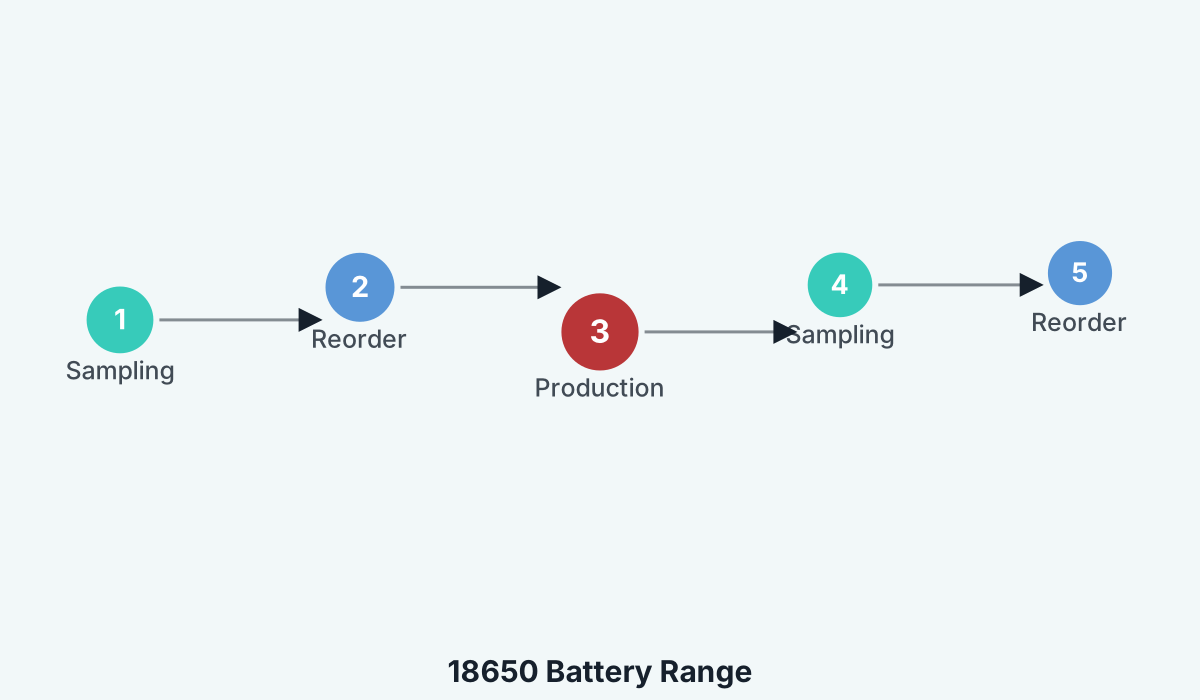
Inspection Before Dispatch
Incoming inspection for 18650 battery is not about opening boxes at random. We weigh a sample of cartons, check batch codes against the production record, run a draw resistance measurement, and log the results so that a complaint three months later can be traced to a specific run.
- Plan the switch from air to sea freight before you need it.
- Keep sealed retained samples from every production batch.
- Model landed cost, not ex-works price, when comparing quotes.
- Start with a mixed carton and let your own sell-through decide.
- Agree the tolerance band in writing before approving artwork.
Turning 18650 Battery Into Repeats
Rotate 18650 battery facing rather than price for the first month. Visibility changes sell-through more reliably than a small discount, and it does not train customers to wait for offers.
Where 18650 Battery Sits in the Range
Decide early whether 18650 battery is a traffic driver or a margin line in your store. The answer changes how you price it, where you place it and how hard you push it at the counter.
Freight, Customs and Timing
Freight is the hidden half of 18650 battery unit economics. A denser master carton can save more per unit than a hard negotiation on factory price, because the saving repeats on every reorder rather than once.
Pricing and Margin
Discounting 18650 battery to win shelf space tends to reset customer expectations permanently. Volume support in kind, such as display material, usually costs less in the long run.
Hold a small 18650 battery buffer in your pricing model for currency movement. A few percent on a container is a real number, and it is easier to plan for than to absorb.
Indicative reference points for planning purposes: entry tier from USD 1.79 per unit at 500 units, mid tier at USD 0.74, and volume tier at USD 1.05 for full container quantities. These figures move with specification, packaging and freight, so treat them as a shape rather than a quote.
The Specification That Matters
Pay attention to how a 18650 battery supplier responds when you ask for a tolerance they do not want to commit to. The hesitation is usually more informative than the eventual answer.
Ask any factory for the same 18650 battery sample twice, three months apart. If the second sample drifts, the production line is running without statistical control and your reviews will drift with it. Consistency over time is a more useful signal than a single good sample.
| Product category | Closed pod |
|---|---|
| Resistance band | 0.6 - 0.8 ohm |
| Capacity tolerance | +/- 3% |
| Puff count method | Declared by capacity |
| Master carton | 400 units |
| Carton weight | 7.9 kg |
| Shelf life | 18 months |
| Storage | 15-25 C, dry, away from direct light |
Practical Checklist
- Keep sealed retained samples from every production batch.
- Rotate stock by batch code rather than by delivery date.
- Start with a mixed carton and let your own sell-through decide.
- Ask how the factory measures puff count, then compare like with like.
- Agree the tolerance band in writing before approving artwork.
- Confirm the current customs classification with your own broker.
Frequently Asked Questions
Is there a warranty on 18650 battery?
Manufacturing defects are covered against the retained sample standard. Normal wear, misuse and damage after opening are not. We publish the threshold in the order terms so both sides know exactly what the claim process looks like.
What is the usual minimum order for 18650 battery?
For a standard production run the minimum is normally one master carton per flavour, though mixed cartons can be arranged for a first order. If you are testing the line, ask about a sample pack first and treat the freight as part of your research budget.
Do you provide compliance documents?
Every shipment leaves with the documentation set relevant to your market, including batch records and test reports where required. Your local rules still determine what you must file, so confirm those with your broker before import.
How do you handle a short shipment?
Cartons are counted and weighed before dispatch and the figures are shared with you. If something is short on arrival, the packing record and the carrier documentation are both available, which keeps the claim straightforward.
Next Step
Whatever you decide, decide it against numbers you can check on arrival. That single discipline removes most of the risk from importing 18650 battery.
Related Reading
- 18650 Battery Contract Clauses Worth Negotiating — Retail Chains
- 18650 Battery Forecasting Without Historical Data — High Volume Buyers
- 18650 Battery OEM and ODM: Which Model Fits Your Business — a Printable Checklist
- 18650 Battery Chargeback Prevention for Retail Partners — Before Your Next Order
- 18650 Battery Cell and Chip Supply Constraints — Repeat Orders
- 18650 Battery Tamper Evidence and Seal Integrity — 2026 Edition